


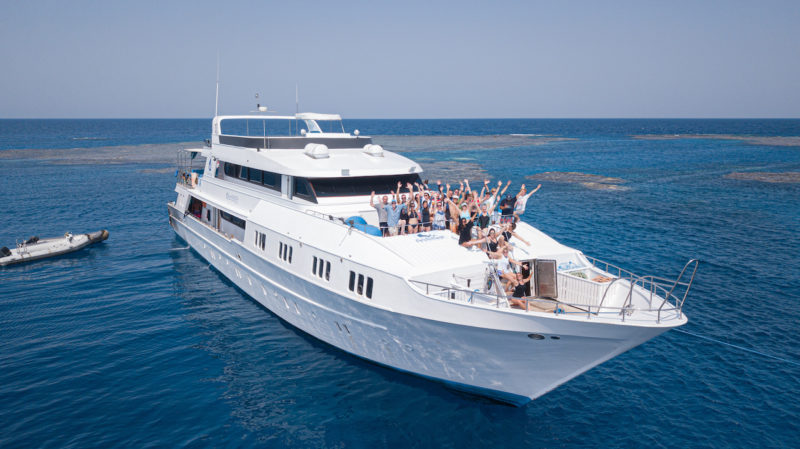
Taking your first liveaboard dive trip can be a life-changing experience. Open solitude, pristine conditions, bountiful wildlife and an untrammeled feeling of adventure top the list of reasons why a liveaboard odyssey should be at the top of your bucket list for 2020 and beyond.
But where to go? And how to prepare? With so many amazing places to dive and experience, it can be intimidating to book that first big trip. So if discovering forgotten islands and diving in clouds of fish sounds like something you’d like to do on your next vacation, here are some useful introductory tips to get started:
1) Get Certified
It sounds like a no-brainer, but even if you’re already open-water certified, it can be nice to go to a dive center and do a refresher or, in this case, potentially take some supplementary courses. Take into account the demands of the liveaboard’s dive itinerary. Are nitrox dives available? Even if you’re not planning to use nitrox, it’s helpful to be fluent in its use, so study up!
2) Get a Passport
Nothing ruins a trip like showing up to the airport without your travel documents. Getting your passport can be a byzantine process, but as long as you fill out the documents and send in a check, you’ll receive a magic booklet in the mail that lets you travel the world. It’s worth it.
3) Do Your Research
With literally a whole world’s worth of diving out there, it can be hard to pull the trigger on deciding where to go. Is there a certain part of the world you’d like to visit? How long do you want to go? What type of aquatic life would you like to encounter? Take all of these questions into consideration as you begin to consider your options. If, say, you especially want to swim with whale sharks, that drastically limits the number of places that are viable candidates for that activity, so weigh your options carefully.
4) Weigh the Value
Price between countries varies greatly. The price cannot guarantee the quality of a trip, at least in terms of conditions, so assess the price carefully. It’s possible for a much cheaper trip in, say, the Philippines to provide conditions better than a pricey destination like French Maldives or Hawaii. It’s all about the context. You can pay for a dream trip, (with dream trip prices), but if you show up and visibility is five meters, no amount of money can change that.
All that said, the types of liveaboard you can book vary a ton! You can set sail on a jury-rigged bangka or a superyacht with a hot tub, it’s all about how much money you want to spend. Backpacker-friendly options do exist, so don’t be scared off by the idea of going on a liveaboard just because you think it’s out of your price range. If money is a factor, try to take advantage of some of the diving in relatively cheaper countries scattered throughout the tropics.
5) Take Reviews With A Grain of Salt
It can be easy to take reviews as gospel and completely write off an experience because of a couple negative experiences. Sometimes group dynamics are off, bad weather cripples at trip or something else just goes wrong. That’s life. Instead of putting all of your weight into the reviews of others, try balancing those forums with the other things garnered from your research.
6) Bring Plenty of Beverages
This is a big deal. Even if you don’t drink alcohol, many liveaboards only bring a certain amount of allocated drinks for the group. And once you’re out in the water, it’s often too late to buy anything (unless another boat is feeling generous). Be sure to stock up on sodas, beer, wine or any other beverages before coming aboard.
7) Bring Some Warm Clothes–And Lotion
Although your days will hopefully filled with sun, the nighttime on your liveaboard will be cold, so remember to pack a pair of pants and hoodie for hanging out at night after the diving’s done. Also, spending so much time handling gear, in the sun, on the water, for days at a time, dries out your skin. Bring some hand lotion or shea butter to apply each night to re-hydrate your skin and prevent cracking and epidermal damage.