


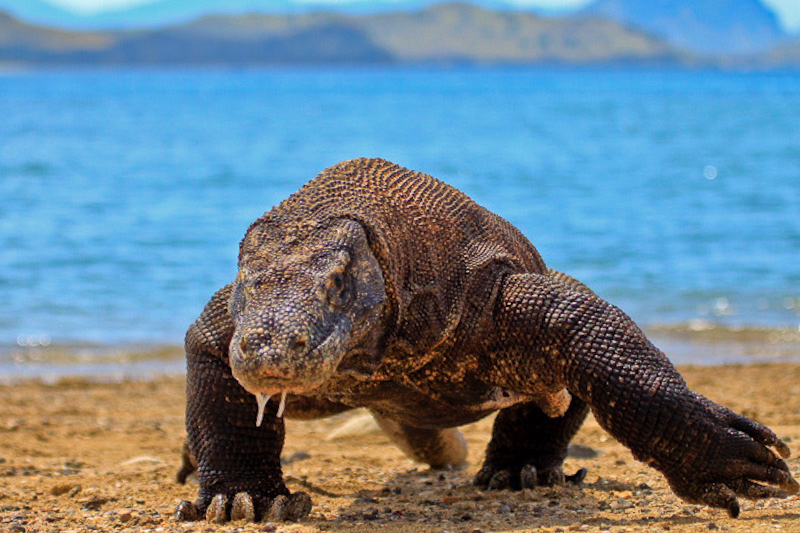
KOMODO, Indonesia — Visitors to Indonesia’s legendary home of dragons, Komodo National Park, might run into a steep cost of entry in the near future as island and national park officials mull a big increase from current levels.
Designated a UNESCO World Heritage site in 1980, Komodo National Park is the only place in the world to see the Komodo Dragon in its natural habitat. The Komodo Dragon also lives on nearby Rinca and Padar Islands, but the tourism infrastructure, new airport and cruise port make Komodo the overwhelming (and overwhelmed) favorite.
For most of its history, the out-of-the-way Komodo Island was relegated to the realm of obscurity and folklore. But with the advent of social media and a booming global travel industry catering to expanding middle classes around the world (China, India), the demand for far away, exotic destinations and experiences has exploded over the last decade.
According to a report in the Telegraph, in 2008 roughly 50,000 people traveled to the island of Komodo. Just 10 years later, in 2018, the number of foreign tourist visitors had shot up past 200,000. All told, over that decade, visits grew by about 400%. That number, coupled with the growing amount of pollution and harm done to the island’s pristine marine environments, has led many island officials to openly question the sustainability of Komodo’s tourism industry.
Located smack-dab in the middle of the enormous Indonesian archipelago, Komodo’s isolation has historically been a blessing and a curse. The isolation and distance has for most of the island’s history guaranteed a pristine environment and exceptionally high biodiversity—both above and below the ocean’s surface. On the flip side, the backwater location has meant that the region has remained largely poor and without growth prospects, until the recent boom in tourism.
This puts Komodo in a tough spot. On the one hand, the appeal of tourism dollars for the impoverished island is too good to refuse, but also the growing impacts of tourism can’t be ignored and threaten to harm the very resources that people come to see.
“People love our dragons, but we cannot go on like this,” a Komodo National Park Ranger told the telegraph during an interview. “When a cruise ship comes in there are many groups all over the place and the dragons don’t like it. People don’t always listen either, putting themselves, the rangers and the dragons in danger.”
One solution floated by Komodo’s community leaders is to drastically raise the fee of admission paid by visitors—especially those coming from cruise lines—who disproportionately impact and overwhelm the area. The current base permit charged to visitors is a mere $10, but that figure could grow substantially in the near future, with the Telegraph suggesting that some in the community are considering raising the fees to $500-$1,000 per visitor.
This all comes on the heels of a proposed year-long closure of Komodo National Park to allow the region’s flora and fauna to recuperate and for local leaders to establish a plan for long term tourism sustainability. The 12-month closure was swiftly lambasted by Komodo locals as a threat to their livelihoods, and after mounting public pressure, the all-out ban was canceled. Instead of the ban, local authorities are seeking ways to protect the region’s natural resources and fauna while also allowing tourists access—for a healthy sum.
Many tour operators, despite the potential escalation in fees, recognize that the status quo in the Komodo region just isn’t sustainable. Sam Clark, cofounder of Experience Travel Group, told the Telegraph that it was a necessary step for the locals to be putting a check on the whole process before things escalate any further.
“Tourism is an important source of income for the local population and crucial for the continued existence of these magnificent creatures,” he told the Telegraph. “Privately guided trips ensure you can rest safe in the knowledge that your trip has contributed to the solution and not the problem.”