


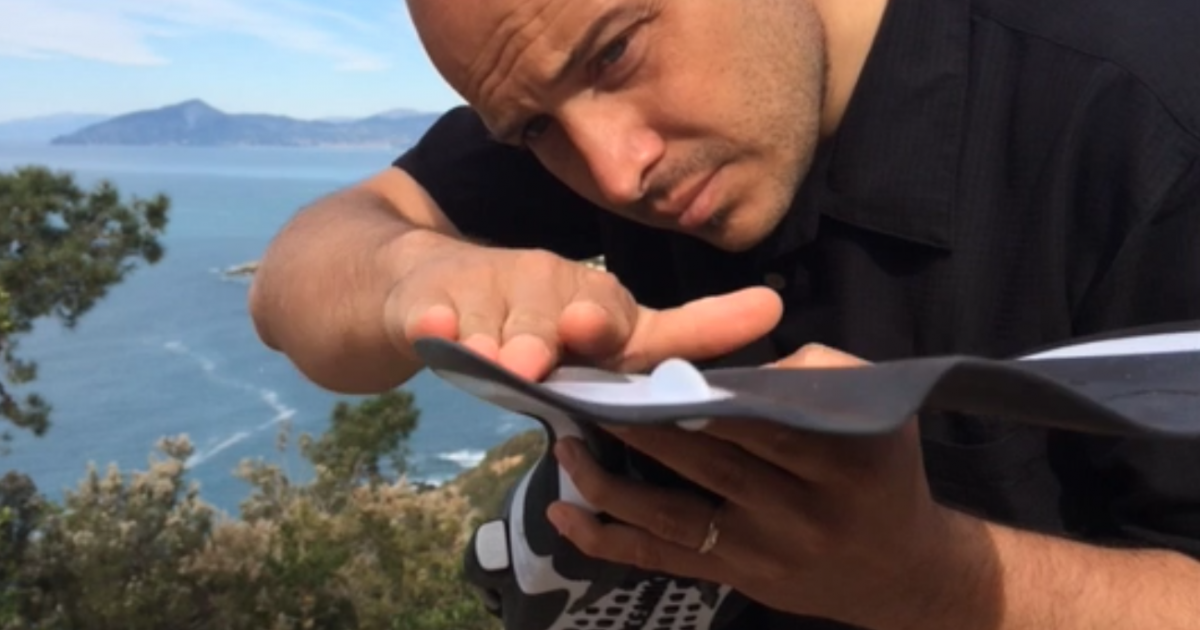
Editor’s Note: The following gear profile was written by Australian Underwater Products CEO Adrian Briggs. In penning the piece, Adrian took a deep dive into the history of scuba design and engineering and examined the meticulous process that went into building the Manta Ray Fins. Additionally, all photos were shot by our VP of Product Development, Andrea Silvestri.
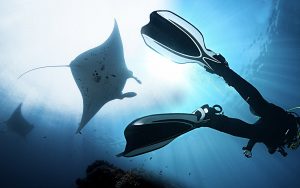
Have no doubt that the human form would look very different if we were designed to spend all our time submerged in the marine environment. Our small hands, small feet, long limbs and inflexible skeletal structure are all evolutionary signs of a true land dwelling species.
That being said, humans are great innovators, and inspired by what we see in the natural world, have achieved feats of ingenuity that continually push the limits of our physical capability.
For as long as humans have ventured into the ocean, we have studied with awe and amazement creatures such as dolphins, whales and powerful pelagic fish species, whose ability to move at incredible speeds with such ease defies comprehension.
Who designed the Manta Ray Fin?
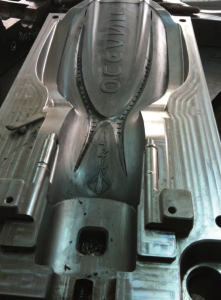
Modern-day designers continue to be inspired by what they observe in the maritime world, and Andrea Silvestri, one of the leading product managers and designers at Oceanic, is no exception. Silvestri has been developing fins for many years, being responsible for several major Italian brands and designs. One of his classic designs, the Oceanic Manta Ray Fins, includes many advanced technologies and design details that come from his many years of experience in materials, human factor studies, and close consultation with US marine biologists.
Today, there are two general categories of fin – “Blade” and “Split” – that make up the broader market in the sports of Scuba Diving, Free diving, Snorkeling and Spearfishing. Each category offers multiple designs and feature sets that all have unique performance characteristics based on the specific style of diving being done, and personal preference of the user. Oceanic’s Manta Ray Fin is a Blade fin design commonly used for Recreational and Technical Scuba Diving applications.
Diver-centric Design
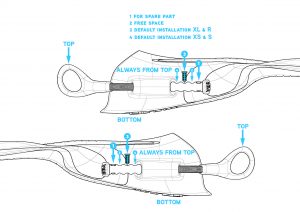
Because not every foot’s the same, a good dive fin needs to have a certain degree of user-friendly size adjustment. The Manta Ray’s solution is a streamlined spring heel strap with patented easy buckle adjustment (EBA). Silvestri demonstrates that by simply pushing the spring you have access to 3 spring adjustment positions on each side for a range of 5 centimeters.
“By pressing the pin to remove,” says Silvestri, “you can easily adjust sizing by reducing or extending the length of the spring. On the last position there is also a spare pin in case you need it. By simply pulling the spring back, the buckle is ready to dive.”
RELATED: Get 35% off the Manta Ray Fins from 2/2/21 through 2/28/21!
When it comes to testing, Silvestri says, “Like every fin development project, the user trial phase, or beta test if you will, is critical. Countless hours of research and development are put into the human biomechanics and material compositions.”
“But,” he continues, “we always need feedback from real-world situations where people are diving frequently, with many different styles and applications to fine-tune our efforts. Ultimately, to produce the best fins, time and effort in testing is critical.”
Tested for Excellence
In the early stages of development, prior to extensive and final in-water trials, the Manta Ray Fins were heavily tested in controlled conditions. Nine different samples were built with varying material combinations and tested amongst 15 individual divers.
The tests utilized standardized activity sets and instruments to objectively measure thrust and air consumption data, along with interviews of the individual divers to measure comfort, stability and overall impression. The material selection was narrowed down to just two options, both of which achieved high thrust and efficiency (air consumption) scores, while maintaining a very natural kick without excessive strain for the divers.
The final material selection was made months later after analyzing feedback from active divers around the globe, including divers in the USA, Europe and Australia. The result has proven to be one of the best performing fins available on the market today.
Wanna kick your dive into gear with the Manta Ray Fin? This February, you can score 35% off the bio-enhanced marvel of engineering when you bundle with any Oceanic mask and snorkel purchase. For more info, click here.